Car file · JA 303
ToyotaMR2 Spyder
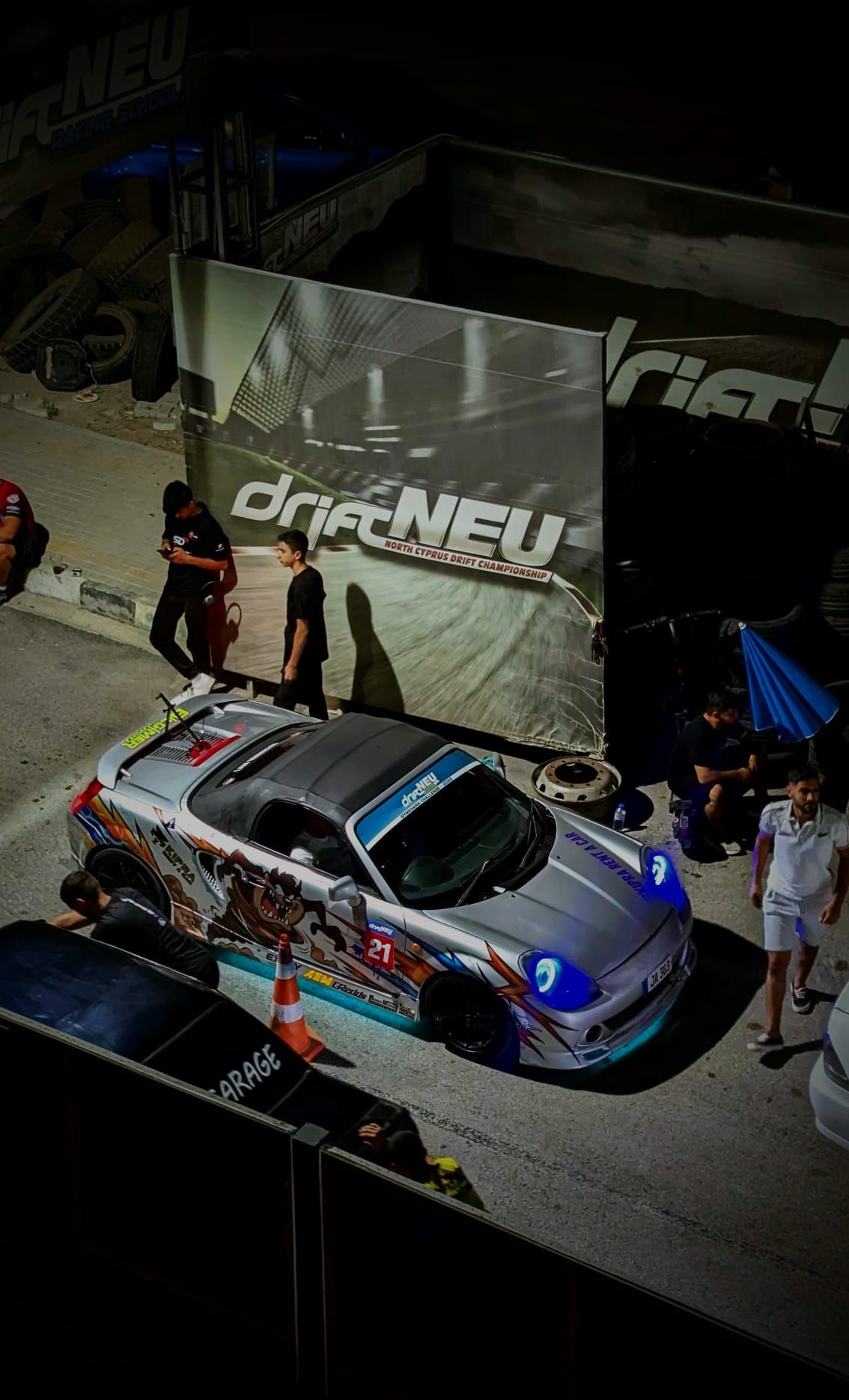
It left the factory with 140 hp and 970 kg. Yusuf Özcan Doğan rebuilt it with his own hands, with a supercharger and an engine making 347+ hp.
- 01Stock power
- 140hp
- 02Stock weight
- 970kg
- 03Engine power
- 347+hp
- 04Performance run
- 60–160km/h
01The story
The world’s craziest project, from North Cyprus
MR2 stands for “Midship Runabout 2-seater”: a mid-engined, two-seat fun car. It was designed as the Japanese entered the European market with compact mid-engined cars in the 80s, by Akio Yoshida, an engineer known as the world’s craziest. Tazzmobil is the third generation, the Toyota MR2 Spyder — one of the most prestigious mid-engined cars in the world.
Stock, it makes 140 hp and weighs 970 kg. The numbers may look small, but for a mid-engined car under a ton they are excellent. The craziness of the project is turning it into a complete fun machine that burns tyres like a monster and draws huge donuts.
The project came out of North Cyprus, and Gazoo Racing appreciated it.
Spec sheetJA 303
- 01Chassis
- Toyota MR2 Spyder, 3rd generation (mid-engine roadster)
- 02Engine
- 1ZZ-FE, built, 347+ hp
- 03Supercharger
- TVS 1320 Magnuson (MWR kit)
- 04Gearbox
- E153 (Camry V6), Cusco Type RS LSD
- 05Suspension
- BC Racing ER coilovers, Cusco chassis braces
- 06Stock
- 140 hp · 970 kg
- 07Livery
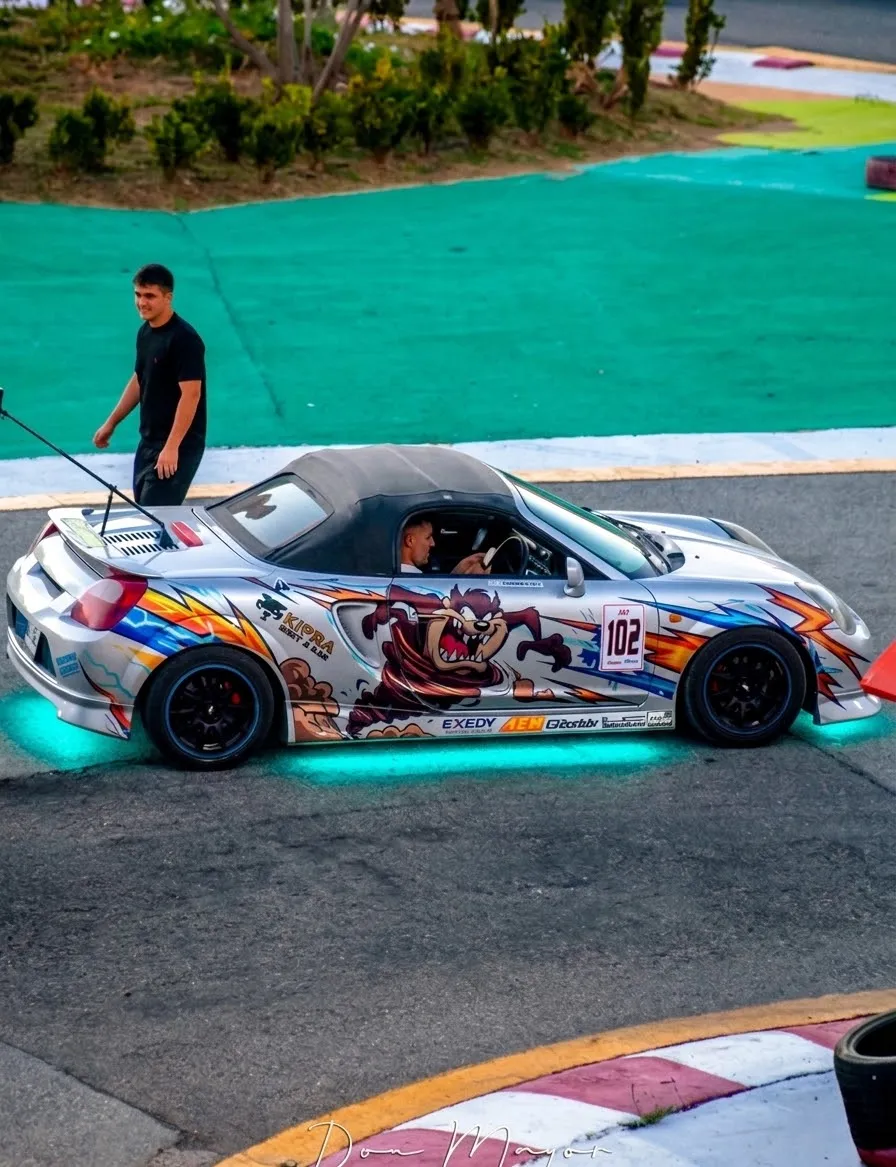
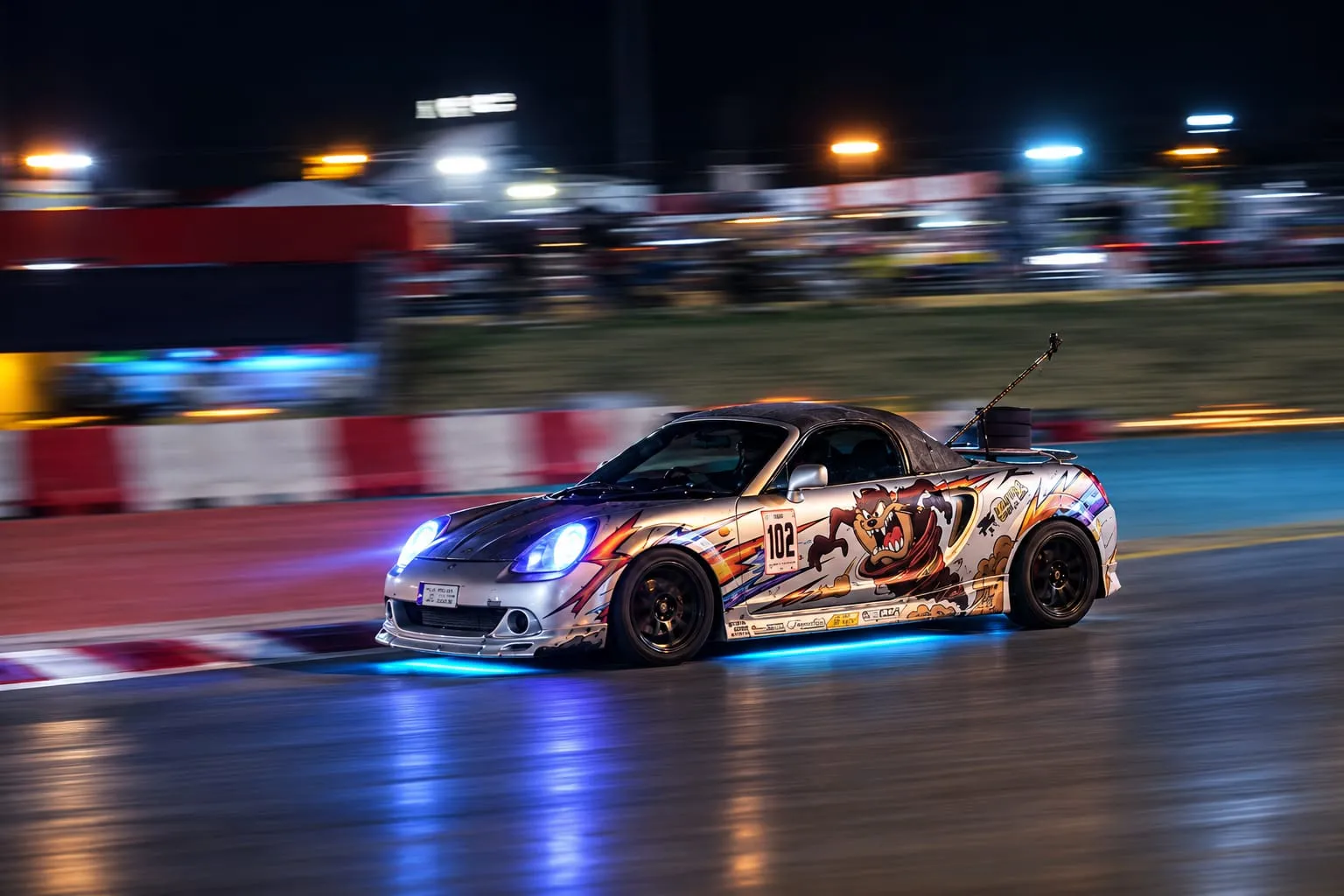
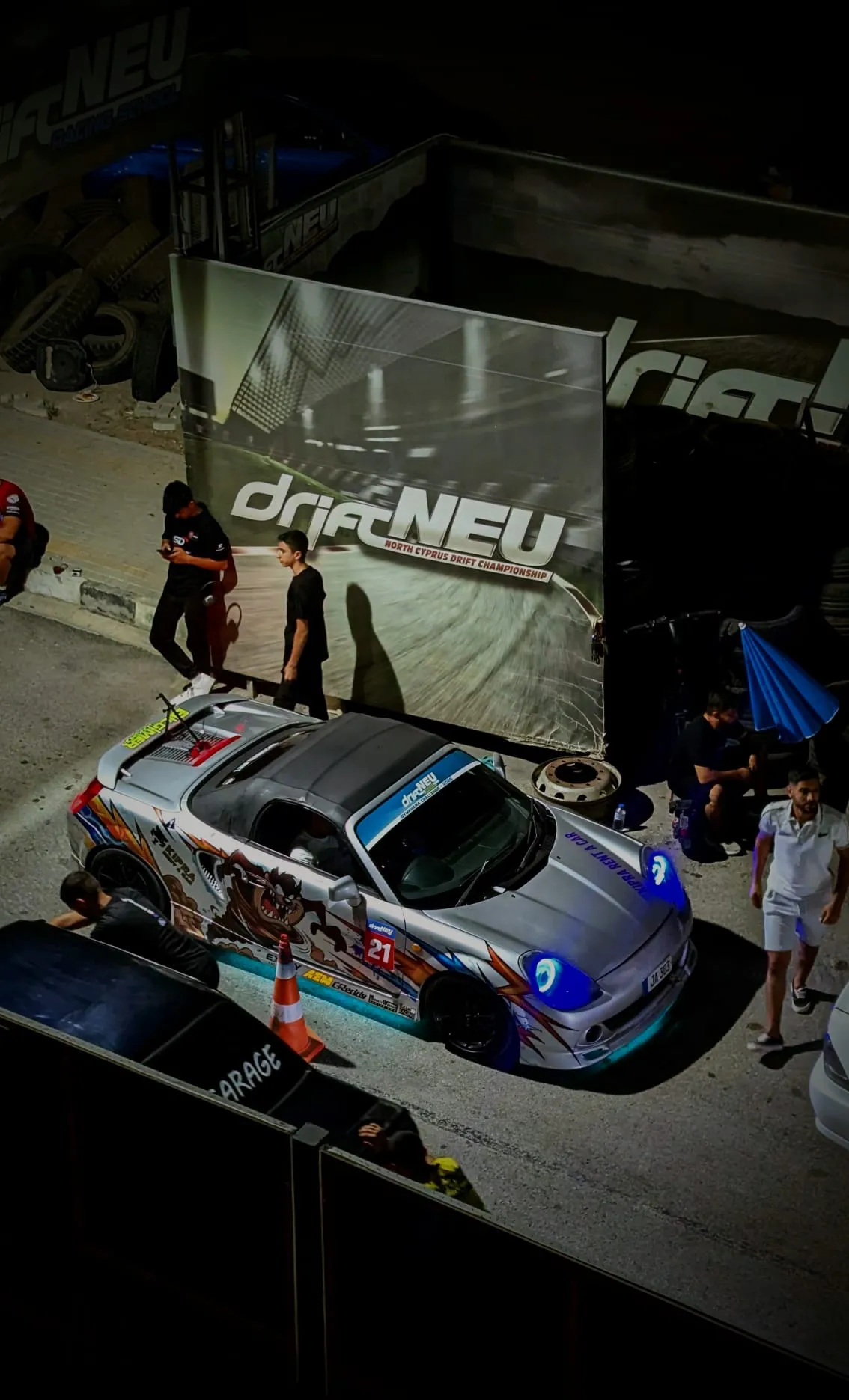
- Silver body, hand-drawn character, lightning and flame graphics
- 08Lights
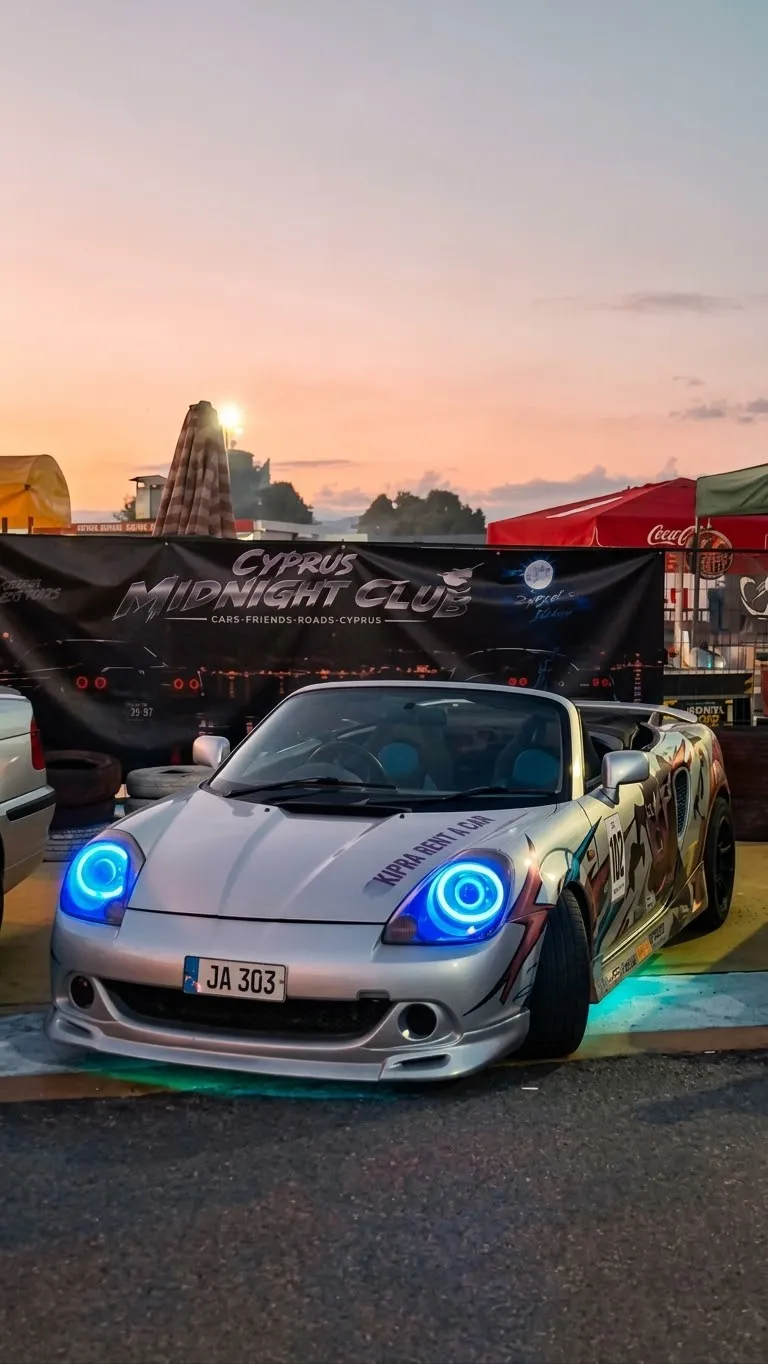
- Blue halo headlights, neon underglow
02Build log
What went into it
From the engine to the chassis, part by part. In Yusuf’s own words.
Stage 01Engine
A bulletproof 1ZZ-FE
The legendary 1ZZ-FE, an engine Toyota co-produced with Yamaha, was taken to bulletproof levels. The weak points were the thin connecting rods and the aluminium block, so the block was reinforced with lightweight steel sleeves. The result: an engine making 347+ hp.
- Stage 3 camshafts
- Billet pistons
- New connecting rods
- Steel-sleeved block
- Billet crankshaft
Stage 02Cooling
Goodbye, front trunk
Cooling was the engine’s other weak point. An aftermarket Mishimoto radiator and fan system made for the legendary Celica GT4 went in, and the front trunk had to go to make room.
- Mishimoto radiator
- Mishimoto fan system
Stage 03SuperchargerThe craziest part
TVS 1320 Magnuson
The full kit came from MWR in America, with a special intake manifold, throttle body and adapters to make it fit. To let air in easier and cooler, a Greddy cold air filter breathes through the left rear vent with short, wide pipes. For real throttle response, the throttle body comes from the 2ZZ-GE, the same engine family: air flows more freely and the response stays sharp.
- TVS 1320 Magnuson (full MWR kit)
- Custom intake manifold
- Greddy cold air filter
- 2ZZ-GE throttle body
Stage 04Fuel & ignition
Feeding the machine
A new fuel line and 800 cc injectors feed the machine, with an AEM 430 lph fuel pump for smooth fuel delivery. For flawless ignition: cold iridium NGK spark plugs and aftermarket ignition coils.
- New fuel line
- 800 cc injectors
- AEM 430 lph fuel pump
- Iridium NGK plugs
- Ignition coils
Stage 05Intake air
Water-meth and IAT
The supercharger heats the air a lot, so a water-methanol mist cools it, sprayed through a hole at the corner of the custom intake manifold. To read the air’s final state on its way to the brain, a second hole in the centre of the manifold holds an open-end IAT sensor.
- Water-methanol injection
- Open-end IAT sensor
Stage 06Drivetrain
The hard part
Getting the power to the wheels was the hard part — learned by doing. Before even 1000 km, an axle broke. A handmade axle rated for 500 hp was about to be ordered from America when the company gave a tip: that won’t work with the original “C” series gearbox. Their idea was the E153 gearbox from the Toyota Camry V6. It went in, and the ratios were shortened straight away: the first 5 gears as short as the C60’s, the last one long for comfort on long roads.
- E153 gearbox (Camry V6)
- Cusco Type RS LSD
- Cusco Japan Stage 4 clutch pressure plate
- MWR Ultra Lightweight flywheel
- New special axles
Stage 07Chassis
A body to take the power
The chassis would have stayed weak against this power. The final reinforcements came from Cusco Japan, all backed up by BC Racing’s world-class ER series coilover suspension.
- Cusco rear lower chassis braces
- Cusco lower centre braces
- Cusco upper and lower front braces
- BC Racing ER coilovers
03Performance
60–160 km/h
The result, from the cockpit at night: Tazzmobil pulling from 60 to 160 km/h. Watch the speedo and the revs — and turn the sound up.
This project is mine, and I did it all with my own hands. I named my car TAZZMOBIL.
04Up close
Up close
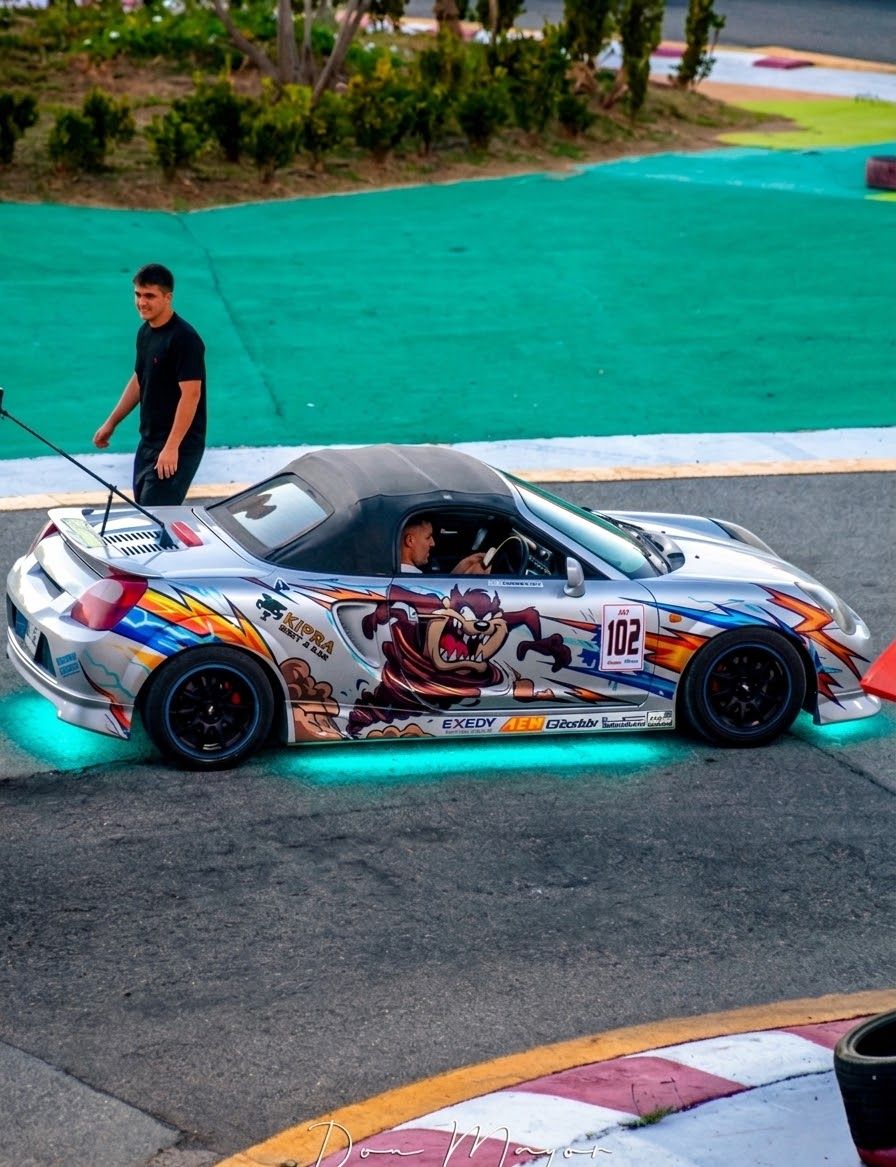
- 01Halo headlightsBlue halo headlights — the car’s signature at night sessions.
- 02Soft topRoadster body, fabric roof.
- 03Mid-engineThe built 1ZZ-FE and its TVS 1320 supercharger, right behind the driver.
- 04Hand-drawn liveryCharacter, lightning bolts, orange-and-blue flames.
- 05Race numberRace number board on the door.
- 06Neon underglowCyan lighting under the body.